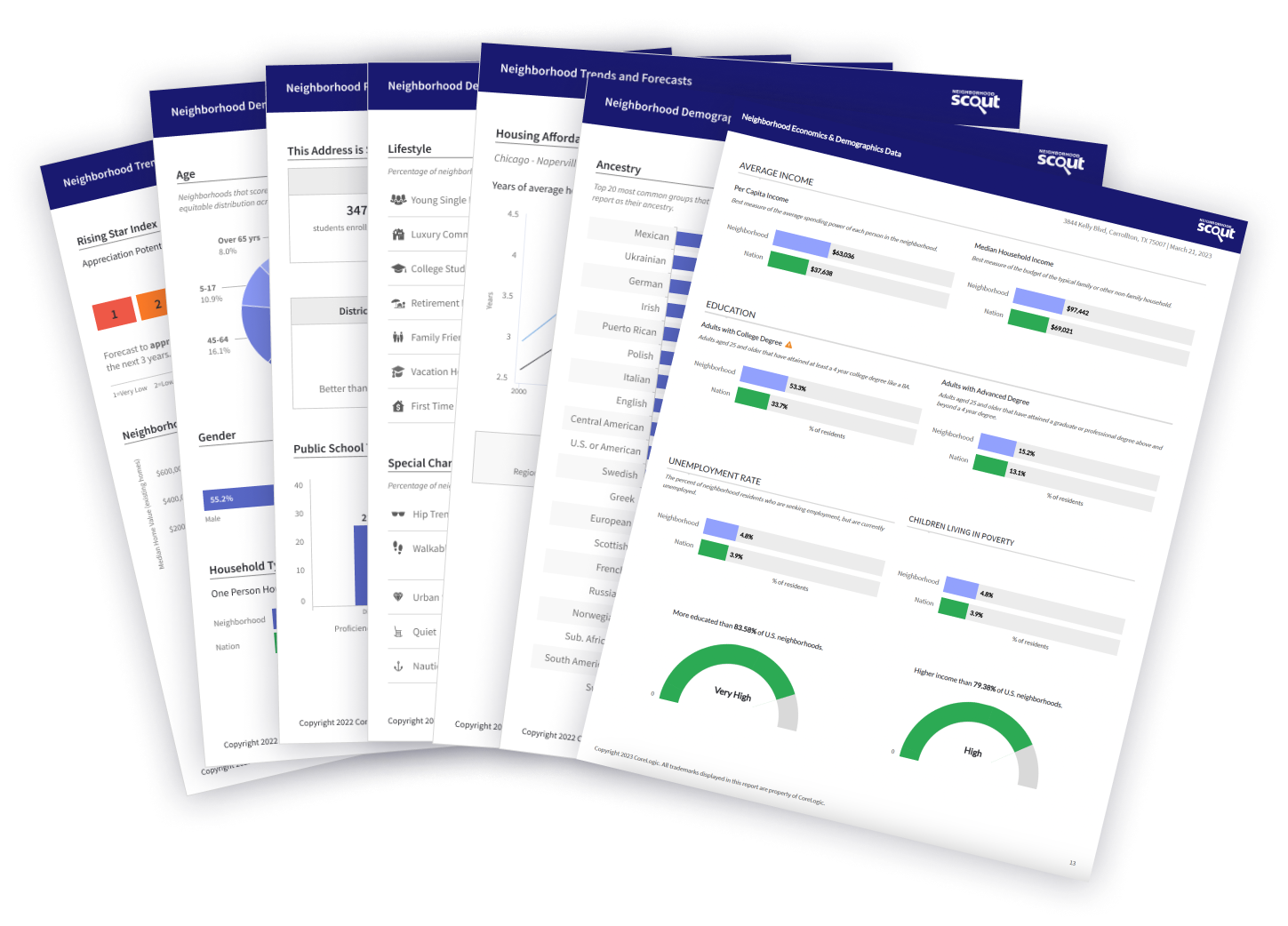
Columbia Heights South median real estate price is $1,409,529, which is more expensive than 85.3% of the neighborhoods in the District Of Columbia and 94.9% of the neighborhoods in the U.S.
The average rental price in Columbia Heights South is currently $3,031, based on NeighborhoodScout's exclusive analysis. Rents here are currently lower in price than 50.5% of District Of Columbia neighborhoods.
Columbia Heights South is a densely urban neighborhood (based on population density) located in Washington, District Of Columbia.
Columbia Heights South real estate is primarily made up of small (studio to two bedroom) to medium sized (three or four bedroom) apartment complexes/high-rise apartments and townhomes. Most of the residential real estate is renter occupied. Many of the residences in the Columbia Heights South neighborhood are relatively historic, built no later than 1939, and in some cases, quite a bit earlier. A number of residences were also built between 2000 and the present.
Home and apartment vacancy rates are 7.9% in Columbia Heights South. NeighborhoodScout analysis shows that this rate is lower than 47.0% of the neighborhoods in the nation, approximately near the middle range for vacancies.
When you see a neighborhood for the first time, the most important thing is often the way it looks, like its homes and its setting. Some places look the same, but they only reveal their true character after living in them for a while because they contain a unique mix of occupational or cultural groups. This neighborhood is very unique in some important ways, according to NeighborhoodScout's exclusive exploration and analysis.
In a nation where 1 out of every 4 children lives in poverty, the Columbia Heights South neighborhood stands out as being ranked among the lowest 0.0% of neighborhoods affected by this global issue.
In addition, think about the people you know personally. How many of them would purchase box seats to opening night at the symphony? How many of them regularly attend gallery openings, or are the first to reserve tickets to opening night at the ballet? If they're like most of us, they don't do any of these things. But if you're among an exclusive crowd of wealthy and refined patrons of the arts, then you'll feel right at home in the Columbia Heights South neighborhood: a neighborhood in which more "urban sophisticates" live than 98.1% of neighborhoods across the U.S. Here, your neighbors are defined as having urbane tastes in literature, music, live theatre and the arts. They are wealthy, educated, travel in style, and live a big city lifestyle whether or not they live in or near a big city. In addition to being an excellent choice for urban sophisticates, this neighborhood is also a very good choice for young, single professionals.
Also, some neighborhoods have residents that are more educated than others. But in this neighborhood there is a dramatic difference. NeighborhoodScout's exclusive analysis reveals that 41.8% of the adults here have earned a Masters degree, medical degree, Ph.D. or law degree. This is a higher rate of people with a graduate degree than is found in 97.5% of U.S. neighborhoods, where the average American neighborhood has 13.7% of its adults with a graduate degree. If you are highly educated, you may have much in common with many of your neighbors here.
If your dream is to be able to ride your bike to work each day, look no further than this unique neighborhood. With 6.8% of residents in the Columbia Heights South neighborhood commuting on a bicycle to and from work daily, this neighborhood has more bicycle commuters than 99.1% of all neighborhoods in the U.S., according to NeighborhoodScout's exclusive analysis.
Also, more people ride the bus in this neighborhood each day to get to work than 97.8% of U.S. neighborhoods.
Finally, in the Columbia Heights South neighborhood, 20.6% of people ride the train to work each day. This is a very high percentage compared to most places. In fact, NeighborhoodScout's analysis reveals that this is a higher level of train ridership than in 97.5% of the neighborhoods in America.
The Columbia Heights South neighborhood is very densely populated compared to most U.S. neighborhoods. In fact, with 40,466 persons per square mile in the neighborhood, it is more packed with people than 97.9% of the nation's neighborhoods. Even if you drive or take transit to your place of employment, many people enjoy being able to walk in their neighborhood. What many people don't realize is that most of America's premier vacation locations are also very walkable. The Columbia Heights South neighborhood is among the top 5% of American neighborhoods in terms of walkability.
The Columbia Heights South neighborhood has a higher proportion of its residents employed as executives, managers and professionals than 98.6% of the neighborhoods in America. In fact, 78.9% of the employed people here make a living as an executive, a manager, or other professional. With such a high concentration, this truly shapes the character of this neighborhood, and to a large degree defines what this neighborhood is about.
Furthermore, the government often provides some of the more stable jobs in the economy. From local, to state, to federal government workers, the government can also be a major employer. What NeighborhoodScout's analysis revealed, is that the Columbia Heights South neighborhood in particular stands out when compared nationally for the proportion of its working residents who are employed by the government. At 17.0% of its workforce, this neighborhood has a greater concentration of government workers than 98.1% of U.S. neighborhoods.
Most American households own a car or other vehicle. Many own two cars or perhaps three. In the United States, it is useful to have an automobile not only for commuting, but also for shopping and getting to other services one needs. But NeighborhoodScout's analysis revealed that households in the Columbia Heights South neighborhood have a highly unusual car ownership. 31.9% of the households in this neighborhood don't own a car at all. This is more carless households than NeighborhoodScout found in 97.3% of U.S. neighborhoods.
Did you know that the Columbia Heights South neighborhood has more Slovak ancestry people living in it than nearly any neighborhood in America? It's true! In fact, 1.2% of this neighborhood's residents have Slovak ancestry.
There are two complementary measures for understanding the income of a neighborhood's residents: the average and the extremes. While a neighborhood may be relatively wealthy overall, it is equally important to understand the rate of people - particularly children - who are living at or below the federal poverty line, which is extremely low income. Some neighborhoods with a lower average income may actually have a lower childhood poverty rate than another with a higher average income, and this helps us understand the conditions and character of a neighborhood.
The neighbors in the Columbia Heights South neighborhood in Washington are wealthy, making it among the 15% highest income neighborhoods in America. NeighborhoodScout's exclusive analysis reveals that this neighborhood has a higher income than 85.8% of the neighborhoods in America. In addition, 0.0% of the children seventeen and under living in this neighborhood are living below the federal poverty line, which is a lower rate of childhood poverty than is found in 100.0% of America's neighborhoods.
What we choose to do for a living reflects who we are. Each neighborhood has a different mix of occupations represented, and together these tell you about the neighborhood and help you understand if this neighborhood may fit your lifestyle.
In the Columbia Heights South neighborhood, 78.9% of the working population is employed in executive, management, and professional occupations. The second most important occupational group in this neighborhood is government jobs, whether they are in local, state, or federal positions, with 17.0% of the residents employed. Other residents here are employed in sales and service jobs, from major sales accounts, to working in fast food restaurants (14.0%), and 6.0% in clerical, assistant, and tech support occupations.
Languages
The languages spoken by people in this neighborhood are diverse. These are tabulated as the languages people preferentially speak when they are at home with their families. The most common language spoken in the Columbia Heights South neighborhood is English, spoken by 82.8% of households. Other important languages spoken here include Spanish and Arabic.
Ethnicity / Ancestry
Culture is the shared learned behavior of peoples. Undeniably, different ethnicities and ancestries have different cultural traditions, and as a result, neighborhoods with concentrations of residents of one or another ethnicities or ancestries will express those cultures. It is what makes the North End in Boston so fun to visit for the Italian restaurants, bakeries, culture, and charm, and similarly, why people enjoy visiting Chinatown in San Francisco.
In the Columbia Heights South neighborhood in Washington, DC, residents most commonly identify their ethnicity or ancestry as Irish (12.4%). There are also a number of people of German ancestry (7.8%), and residents who report Italian roots (6.6%), and some of the residents are also of English ancestry (6.5%), along with some Asian ancestry residents (5.3%), among others. In addition, 12.8% of the residents of this neighborhood were born in another country.
How you get to work – car, bus, train or other means – and how much of your day it takes to do so is a large quality of life and financial issue. Especially with gasoline prices rising and expected to continue doing so, the length and means of one's commute can be a financial burden. Some neighborhoods are physically located so that many residents have to drive in their own car, others are set up so many walk to work, or can take a train, bus, or bike. The greatest number of commuters in Columbia Heights South neighborhood spend between 30 and 45 minutes commuting one-way to work (40.1% of working residents), which is at or a bit above the average length of a commute across all U.S. neighborhoods.
Here most residents (22.8%) drive alone in a private automobile to get to work. In addition, quite a number also take the train to get to work (20.6%) and 16.0% of residents also ride the bus for their daily commute. In a neighborhood like this, as in most of the nation, many residents find owning a car useful for getting to work.