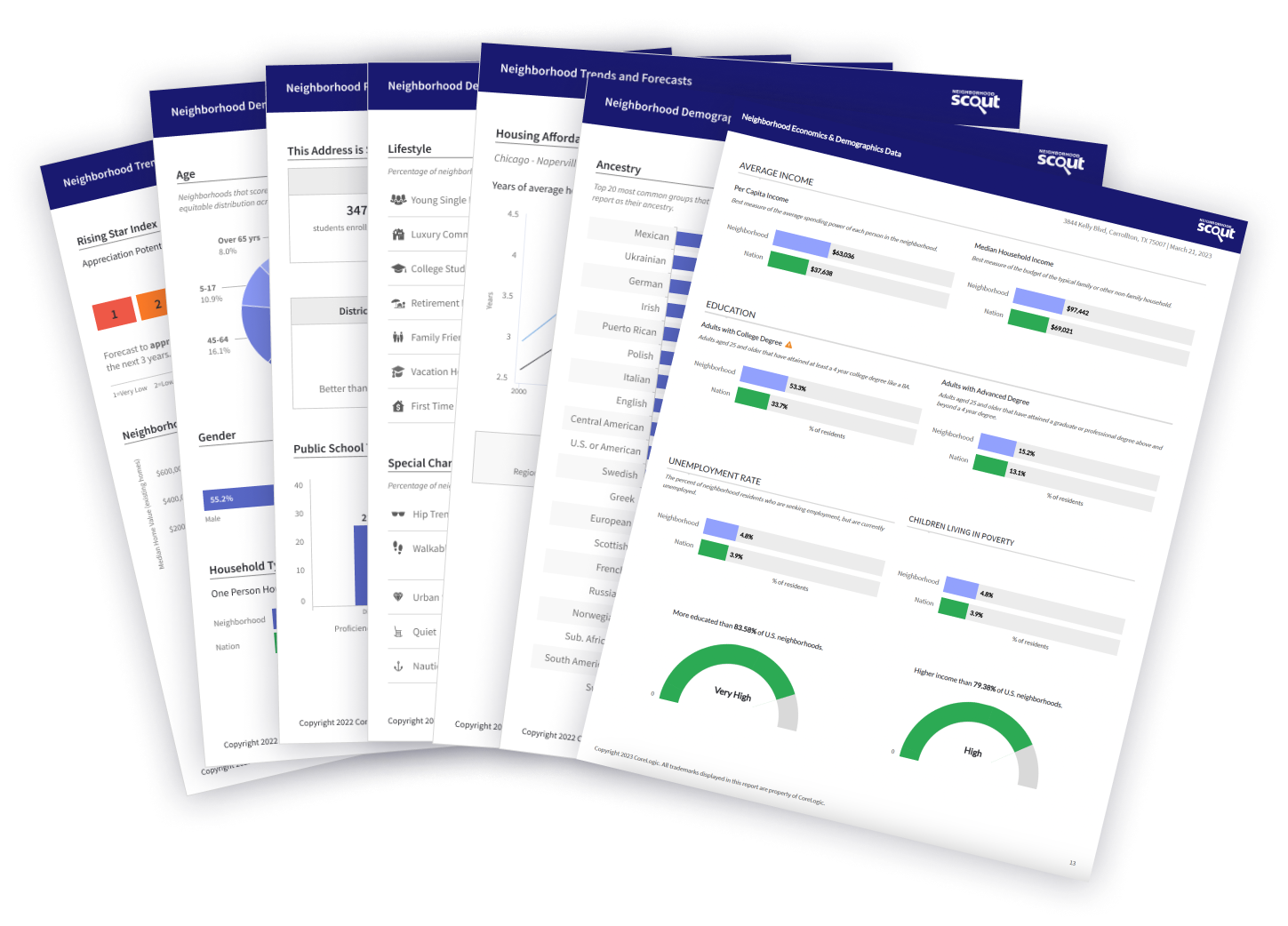
Marina Pacifica median real estate price is $1,142,450, which is more expensive than 68.5% of the neighborhoods in California and 92.8% of the neighborhoods in the U.S.
The average rental price in Marina Pacifica is currently $5,401, based on NeighborhoodScout's exclusive analysis. The average rental cost in this neighborhood is higher than 91.8% of the neighborhoods in California.
Marina Pacifica is a suburban neighborhood (based on population density) located in Long Beach, California. This is a coastal neighborhood (i.e., is on the ocean, a bay, or inlet).
Marina Pacifica real estate is primarily made up of small (studio to two bedroom) to medium sized (three or four bedroom) apartment complexes/high-rise apartments and single-family homes. Most of the residential real estate is owner occupied. Many of the residences in the Marina Pacifica neighborhood are established but not old, having been built between 1970 and 1999. A number of residences were also built between 1940 and 1969.
Home and apartment vacancy rates are 7.2% in Marina Pacifica. NeighborhoodScout analysis shows that this rate is lower than 51.3% of the neighborhoods in the nation, approximately near the middle range for vacancies.
The way a neighborhood looks and feels when you walk or drive around it, from its setting, its buildings, and its flavor, can make all the difference. This neighborhood has some really cool things about the way it looks and feels as revealed by NeighborhoodScout's exclusive research. This might include anything from the housing stock to the types of households living here to how people get around.
Do you like a coastal setting? If so, this neighborhood may be to your liking. The Marina Pacifica neighborhood is on the ocean, a bay, or inlet. Often such coastal places have amenities and recreational activities on the waterfront that are attractive to residents and visitors alike. In addition to being coastal, Marina Pacifica is a very nautical neighborhood, meaning that it is somewhat historic, walkable, densely populated and on the water. This gives the neighborhood a very nautical feel, with some seaside and shipping feel, which some may really enjoy the sights and sounds of.
In addition, most neighborhoods are composed of a mixture of ages of homes, but the Marina Pacifica stands out as rather unique in having nearly all of its residential real estate built in one time period, namely between 1970 and 1999, generally considered to be established, but not old housing. What you'll sense when you look around or drive the streets of this neighborhood is that many of the residences look the same because of this similarity of age. In fact, 94.4% of the residential real estate here was built in this one time period.
Regardless of the means by which residents commute, this neighborhood has a length of commute that is notable. Long commutes can be brutal. They take time, money, and energy, leaving less of you for yourself and your family. The residents of the Marina Pacifica neighborhood unfortunately have the distinction of having, on average, a longer commute than most any neighborhood in America. 12.4% of commuters here travel more than one hour just one-way to work. That is more than two hours per day. This percentage with two-hour + round-trip commutes is higher than NeighborhoodScout found in 97.5% of all neighborhoods in America.
If you're planning where to retire, the Marina Pacifica neighborhood in Long Beach is a great option to consider. According to NeighborhoodScout's exclusive retirement dream area analysis, it's peaceful and quiet, has above average safety ratings compared to other neighborhoods in CA, offers a wide range of housing options, and has already attracted an enviable mix of college educated seniors. This neighborhood ranks as better for retirement living than 87.9% of the neighborhoods in California. If you are considering retiring to California, this is a good neighborhood to look at.
Did you know that the Marina Pacifica neighborhood has more Russian and Finnish ancestry people living in it than nearly any neighborhood in America? It's true! In fact, 8.9% of this neighborhood's residents have Russian ancestry and 2.0% have Finnish ancestry.
Marina Pacifica is also pretty special linguistically. Significantly, 0.8% of its residents five years old and above primarily speak Japanese at home. While this may seem like a small percentage, it is higher than 96.4% of the neighborhoods in America.
There are two complementary measures for understanding the income of a neighborhood's residents: the average and the extremes. While a neighborhood may be relatively wealthy overall, it is equally important to understand the rate of people - particularly children - who are living at or below the federal poverty line, which is extremely low income. Some neighborhoods with a lower average income may actually have a lower childhood poverty rate than another with a higher average income, and this helps us understand the conditions and character of a neighborhood.
The neighbors in the Marina Pacifica neighborhood in Long Beach are upper-middle income, making it an above average income neighborhood. NeighborhoodScout's exclusive analysis reveals that this neighborhood has a higher income than 78.7% of the neighborhoods in America. In addition, 7.1% of the children seventeen and under living in this neighborhood are living below the federal poverty line, which is a lower rate of childhood poverty than is found in 57.8% of America's neighborhoods.
The old saying "you are what you eat" is true. But it is also true that you are what you do for a living. The types of occupations your neighbors have shape their character, and together as a group, their collective occupations shape the culture of a place.
In the Marina Pacifica neighborhood, 67.9% of the working population is employed in executive, management, and professional occupations. The second most important occupational group in this neighborhood is sales and service jobs, from major sales accounts, to working in fast food restaurants, with 24.0% of the residents employed. Other residents here are employed in clerical, assistant, and tech support occupations (7.6%), and 2.2% in government jobs, whether they are in local, state, or federal positions.
The most common language spoken in the Marina Pacifica neighborhood is English, spoken by 88.2% of households. Some people also speak Spanish (7.7%).
Culture is shared learned behavior. We learn it from our parents, their parents, our houses of worship, and much of our culture – our learned behavior – comes from our ancestors. That is why ancestry and ethnicity can be so interesting and important to understand: places with concentrations of people of one or more ancestries often express those shared learned behaviors and this gives each neighborhood its own culture. Even different neighborhoods in the same city can have drastically different cultures.
In the Marina Pacifica neighborhood in Long Beach, CA, residents most commonly identify their ethnicity or ancestry as Irish (15.0%). There are also a number of people of English ancestry (12.2%), and residents who report Mexican roots (10.6%), and some of the residents are also of German ancestry (9.5%), along with some Russian ancestry residents (8.9%), among others. In addition, 16.7% of the residents of this neighborhood were born in another country.
Even if your neighborhood is walkable, you may still have to drive to your place of work. Some neighborhoods are located where many can get to work in just a few minutes, while others are located such that most residents have a long and arduous commute. The greatest number of commuters in Marina Pacifica neighborhood spend between 45 minutes and one hour commuting one-way to work (26.3% of working residents), longer and tougher than most commutes in America.
Here most residents (70.6%) drive alone in a private automobile to get to work. In addition, quite a number also hop out the door and walk to work to get to work (8.5%) . In a neighborhood like this, as in most of the nation, many residents find owning a car useful for getting to work.